By Audrey Posten
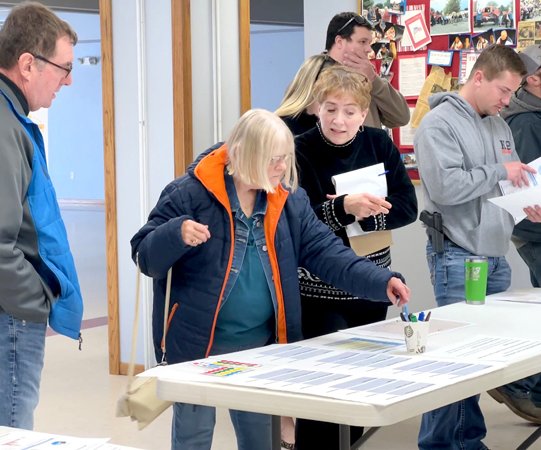
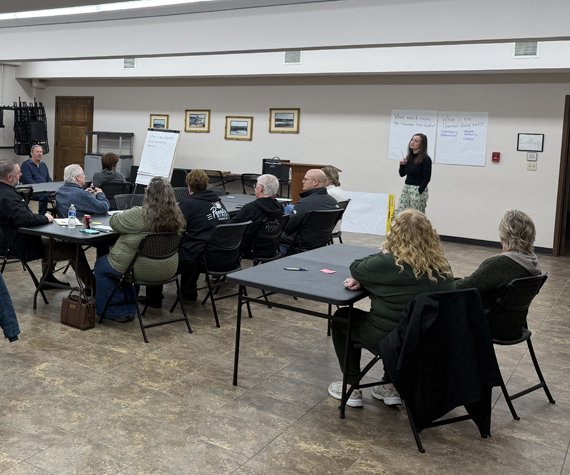
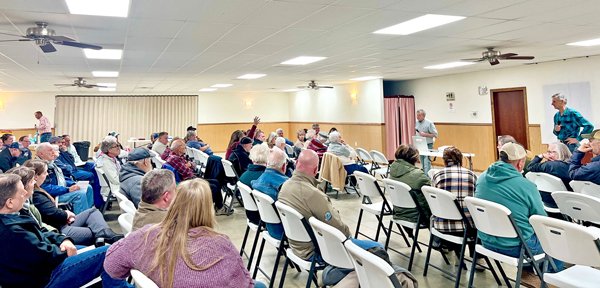
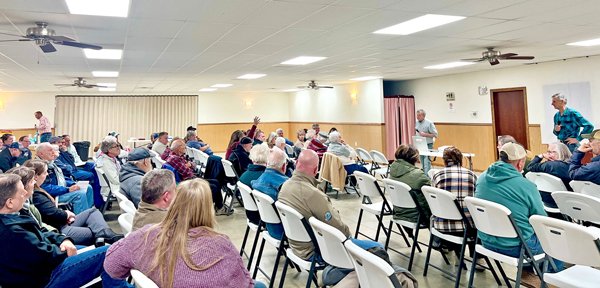
Seventy-five people representing 13 parishes attended a meeting in Elkport on Feb. 25 that was led by Save Our Churches, Save Our Communities, a grassroots group disputing the Archdiocese of Dubuque’s proposed Journey in Faith plan that would restructure Catholic parishes and limit or end masses at some churches.
The archdiocese says its plan will address a priest shortage and declining attendance, but Save Our Churches, Save Our Communities claims parishioners’ voices are not being heard through the process—and that the Journey in Faith proposal will spiritually harm not only parishes, but whole communities in northeast Iowa.
Journey in Faith proposes an 83 percent reduction in parishes in the archdiocese’s 30-county area, from 160 to 27 to 29 pastorates. That includes a 50 percent reduction in churches holding weekend mass, with 83 churches no longer having a weekend mass.
“This is our sixth meeting now to try to spread the word to other parishes, to see if we can move forward and do anything to fight this,” said Dan Goedken, a member of Ss. Peter and Paul Catholic Church in Petersburg. “Most people you talk to don’t feel like their voices are being heard. They feel like it’s predetermined.”
Goedken led the meeting along with Wayne Brunsman, a parishioner from St. Boniface Catholic Church in New Vienna, as well as ReNae Franna from Our Lady of Seven Dolors in Festina.
“We’re working with Save Our Churches, Save Our Communities because, in small town communities, oftentimes a church and the community are one and the same. You lose one and you really downgrade the other,” Brunsman said. “We’re not experts, we’re not lawyers. We’re just parishioners trying to do the right thing.”
The group cited similar restructuring plans around the country, from Toledo, Ohio to Chicago, Buffalo, St. Louis and Philadelphia. They said shrinking the number of available Catholic churches has not resulted in improved vocations to the priesthood or increased attendance or membership. In fact, said Franna, many people stop attending mass—and take their money with them.
The Catholic Leadership Institute, a private non-profit, is assisting the Archdiocese of Dubuque through the process. “They did not provide us with any testimonials. They did not provide us with the success rate where they’ve done this before,” Franna said.
She fears the loss of local voices if current parishes go away.
“Even if you’re having mass, your parish is still going to go away,” she said. “If you keep your parish, you have a voice. If you lose your parish, you do not have a voice.”
Brunsman said the Archdiocese of Dubuque is expected to announce how it will move forward with parish groupings, or pastorates, in April. He and others within Save Our Churches, Save Our Communities are taking prayerful, respectful action within the norms of canon law to put parishes in the best position to respond. To do so, they are working with the St. Joseph Foundation, a non-profit that protects Catholic rights under canon law.
They have also formed a diocesan core group representing all parishes that seeks to end or modify the Journey in Faith proposal. A procurator, or lead agent, has been appointed to represent their interests at the diocesan level through a document called a mandate. Ken Ehler from Calmar will fill that role.
“The main language in the diocesan mandate opposes the notable alteration of the Archdiocese of Dubuque by way of large scale parish mergers or any other notable alteration,” Brunsman said.
Each individual parish is also encouraged to form a parish core group, headed by a procurator, with its own mandate.
“The parish one is more specific. We oppose either any alteration or an extinction for my parish. I oppose the neglect, de facto closure, which means pushing your church into a status of disuse as a church...or reduction in the canonical status of the parish or parish church by any means,” Brunsman continued.
Along with a mandate, parishes are being asked to collect financial and attendance data as well as sacramental records.
“We just don’t know what they’re going to base their decree on, so we’re trying to be ready to refute any argument they come up with,” Brunsman said. “Whether you get a mass right now, things can change in a hurry after that. You may have a pastor right now who’s pretty sympathetic to your situation and may offer you masses, but that could change in a heartbeat based on the pastor and the pastor’s attitude. The mergers and extinctions is the main concern here.”
Parishes will have 10 useful days to respond to a decree. Save Our Churches, Save Our Communities hopes to have mandates and data in hand before the decree announced this spring. With mandates supporting a procurator, only the procurator’s signature would be needed for an appeal.
“We need numbers. It’s a big diocese,” Brunsman said. “The more of those we get to sign, the more support it’s going to show when we proceed with a mandate. If it’s just a handful of people, they’re going to write it off as insignificant.”
Save Our Churches, Save Our Communities encouraged attendees to do their own research and draw their own conclusions about Journey in Faith. They said it’s OK not to agree, urging respect and kindness.
“It is not a question of our faith, but a question of the decisions being made by the leadership of our church. They are human, as are you and I,” said Brunsman. “Pray for them, pray for our priests, pray for the bishop and pray for each other.”
Goedken acknowledged it’s a long road ahead. But organization offers power.
“The more people we get to stand up and try to fight it, the more power we’ve got,” he said.
Learn more at https://saveourchurchessaveourcommunities.com/ or follow the group on social media.