By Audrey Posten
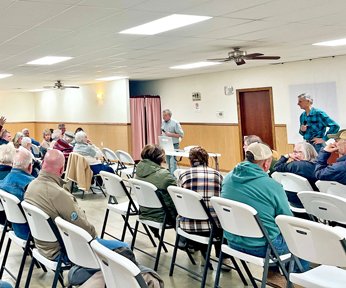
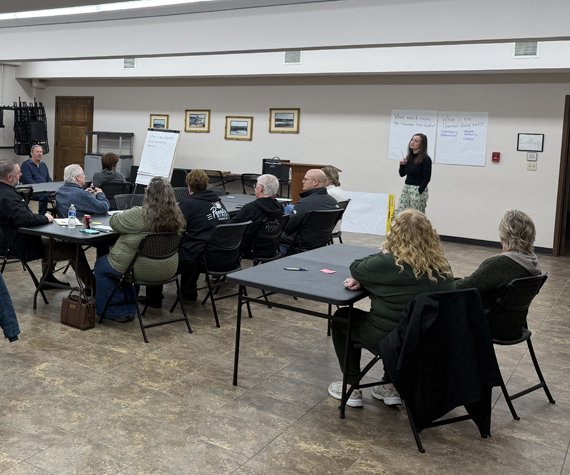
The first in a series of community hazard mitigation meetings that will provide feedback for Clayton County’s updated hazard mitigation plan were held last week. Meetings in additional communities are set for next week.
Clayton County Emergency Management, with assistance from Upper Explorerland Regional Planning Commission and a county-wide planning committee, is completing the update to the plan, which looks at hazard risks and identifies mitigation strategies for reducing their impacts.
“We make a point of going around and doing all these local meetings with the cities. At the same time, we are doing county-wide meetings with a committee,” explained Michelle Barness, senior regional planner with Upper Explorerland Regional Planning Commission.
According to Barness, hazard mitigation plans are updated every five years, and completion allows entities to access Federal Emergency Management Agency funding for mitigation type projects.
“It’s also recommended because it allows communities, at least once every five years, to talk about hazard risks locally, which isn’t a bad idea. Sometimes those risks don’t change significantly and sometimes they shift over time,” she added.
The county’s emergency management commission includes representation from throughout the county, focusing on cities as well as unincorporated areas. Planning further helps Clayton County Emergency Management Coordinator Sarah Moser and the committee become more aware of hazards throughout the county.
“There are things I might not know of, but a local’s going to know. We have these meetings and put the plan together to be able to address [hazards] and hopefully mitigate them, to not have issues if that happens,” she said.
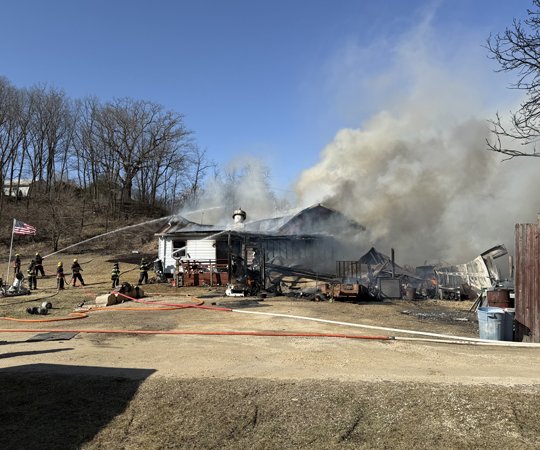
Hazard risks can be natural or man-made, ranging from storms and flooding, infrastructure failure, transportation incidents and more.
Moser said Clayton County’s diverse geography, paired with high levels of rail traffic and agriculture, offers a variety of potential hazards. Most haven’t changed much over time.
“But I do think we are paying more attention to wind events and losing power after the derecho,” she explained. “Who has generators and what does that look like? How self sustaining is a community? We have 18 in Clayton County, so it’d be very challenging for me to be able to respond to every single one. So how much can they handle on their own first?”
In the aftermath of the COVID-19 pandemic, planning for future pandemics also has to be taken into account. Moser has additionally focused on trainings related to foreign animal disease outbreaks.
“Obviously, Clayton County, with our farms, there’s a lot that can happen,” she said.
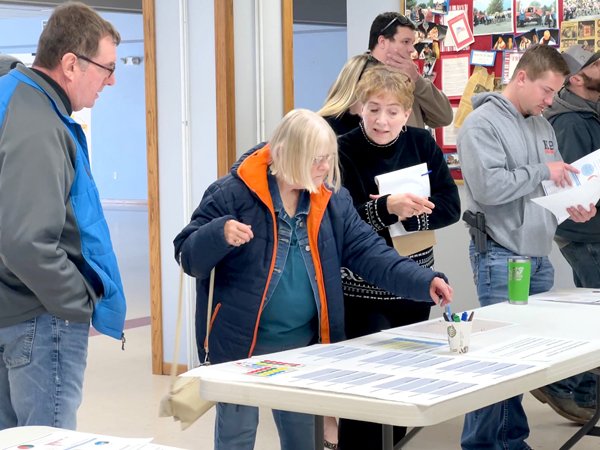
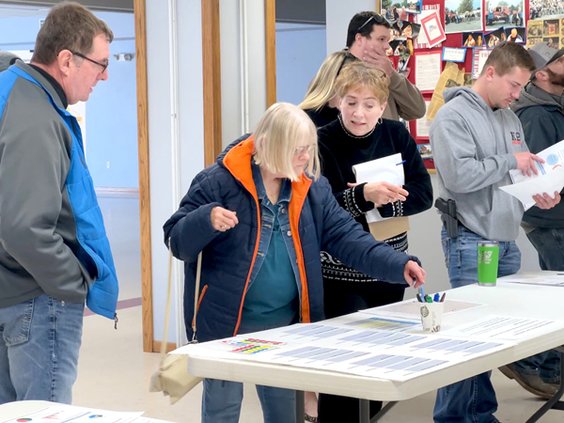
At the informal, public sessions, attendees are asked to review information on hazard risks in their community, then weigh in on what they think matters most for future planning. Barness stressed that no prior experience is needed to attend.
Maps show vulnerable “communities” within a city, such as nursing homes or childcare centers, “so you can visualize what those risks are in your community, or what those groups are we want to consider,” Barness stated.
Potential hazard mitigation actions noted in the previous five-year plan will be re-visited, to see if they’ve been completed or still require work.
Meetings were held last week for Monona/Luana, Strawberry Point and Garber/Elkport/Osterdock.
Upcoming meetings on Monday, March 9 include:
• Elkader Meeting - 3 to 4 p.m. at the emergency services building/fire station (921 Humphrey St.)
• Volga - 5:30 to 6:30 p.m. at Volga City Hall (601 Washington St.)
• Joint Farmersburg/St. Olaf - 7:30 to 8:30 p.m. at the Farmersburg Community Center (109 S. Main St.)
Upcoming meetings on Wednesday, March 11 include:
• Joint Guttenberg/North Buena Vista - 12 to 2 p.m. at Guttenberg City Hall, in the upstairs auditorium (502 S. First St.)
• Joint Garnavillo/Clayton - 4:30 to 5:30 p.m. at the Garnavillo Community Building (106 W. Niagra St.)
• Joint Marquette/McGregor - 6:30 to 7:30 p.m. at the Marquette community room (102 North St.)
For those who are unable to attend, but would still like to share feedback, Moser plans to put out an online survey. She’s also encouraging people to think not just of their community’s preparedness, but their own.
“How prepared are you to deal with these things? Do you have a weather radio? Do you have any emergency stuff?” she said. “Because, yes, we are preparing for a county level, but also each individual needs to prepare for themselves, too, and not rely on others. It gets everybody thinking.”
All the information gathered through this process will go before the county-wide committee for review, according to Barness.
“Before we finalize a plan, we’ll really hone in on what makes the most sense,” she said.
Check out the Clayton County Hazard Mitigation Plan website at https://uerpc.org/hazard-mitigation-clayton-county/ to see the current plan, related resources and contact information.