
By Steve Van Kooten
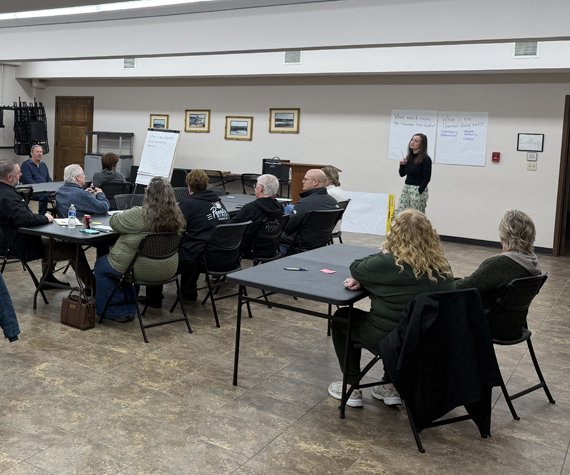
The Clayton Ridge Board of Directors held a public hearing considering a Flexibility Fund at their Jan. 8 meeting in Guttenberg.
"The Flexibility Fund is a fund that allows us to take money from categorical funds and move them into the General Fund for the purpose of using them for multiple things," said District Administrator Shane Wahls.
Wahls added that the practice of flexibility funding has been available to school districts for approximately four years, and Clayton Ridge has utilized it each year it has been available.
The amount of money under consideration was later announced by the district as $416,540.
"Typically, what we do is use some of those dollars to reduce our special education deficit. We have used it to purchase technology, which we did last year as well — we purchased iPads for the elementary building. It can be used for preschool deficit — we've done that before... It's a way of taking the burden off of the taxpayer and allowing us the flexibility to use those funds," he said.
The board will have to approve where the funds will go before the district can reallocate the money.
Wahls said the district used funds to help balance a deficit in the special education department.
"Typically, we run a deficit in special education because it costs more to educate students [who] have special needs. You get additional dollars for that from the state, but at the same time, those costs usually run well beyond that," he said.
The superintendent said the district runs with a deficit of around $285,000 per year in the special education budget, which he estimated is near the average for a school of Clayton Ridge's size.
"We usually can't completely pay that off, but we try to reduce some of it and hit other things," he said.
Logan Taylor, the district's business manager, said, "The special education deficit has budget implications, too, like the tax levy and stuff, as we get into budget season this upcoming spring."
He also clarified that the "categorical funds" Wahls spoke of were "balances that were in excess at the end of the fiscal year 2025, so you have to wait until the next year to move them."
He added that funds could be moved "as soon as this year."
The excess funds that would be moved are from the district's TLC (Teacher Leadership and Compensation) fund, which has a surplus balance because of the virtual school, according to Wahls.
"The virtual school staff is not employed by the school district, so they don't have access to those funds," he said. "It is strictly the teacher leadership dollars that flow from the state to the virtual school, but they cannot use those because they have to be district employees to do so."
"This was put into play on purpose by the state a few years ago because some of these categorical funds would sit padded, if you will, and people didn't have the means to spend them while general fund budgets were running dry or short," said Wahls. "So, it gave districts the ability to take extra funds that they can't or aren't able to spend and bring them over to cover costs."
The board unanimously approved moving categorical funds through the Flexibility Fund.
Resignations
Jason Hefel, junior high football coach; Jonathan Klaes, junior high football coach; Theresa Sample-Anderson, custodian; and Joe Sheston, high school teacher (effective at the end of the 2025-26 school year).
Retirements
Christine Torkelson, middle school and high school teacher's associate (effective at the end of the school year).
Other business
- The school approved the purchase of two buses at a cost of approx. $295,000.
- Approved a year-end stipend of approx. $18,500 to be distributed between the district's hourly employees.