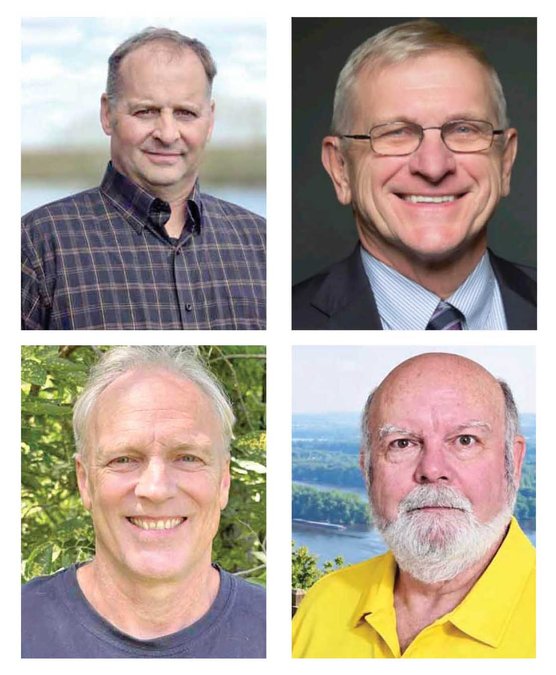
Clayton County voters will head to the polls Tuesday, Nov. 3, for Iowa’s general election, which includes a contested race for two seats on the Clayton County Board of Supervisors. Four candidates are seeking the seats: Republicans Doug Reimer and Brian Harbaugh and Democrats Eric Grau and Randall Laughead. Reimer is seeking reelection, while Supervisor Steve Doeppke is not running for another term.
On Election Day, polls will be open from 7 a.m. to 8 p.m. across Clayton County. Voters may select up to two candidates in the Board of Supervisors race. Absentee voting is also underway through the Clayton County Auditor’s Office, with ballots able to be cast in person at the courthouse ahead of Election Day or by mail for those who requested one.
Clayton County’s Board of Supervisors is made up of three members elected to four-year terms. Current members are Doug Reimer, first elected in 2022; Steve Doeppke, first elected in 2018; and Ray Peterson, first elected in 2016. As part of election coverage, the Times-Register and Guttenberg Press asked each candidate the same set of questions regarding their background, priorities and vision for the county. Responses are published below as submitted, with minor edits for style and clarity.
Eric Grau
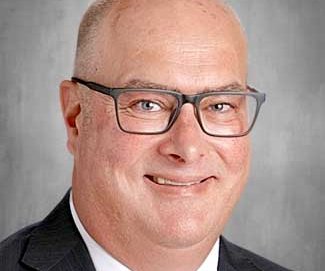
Eric Grau lives in Elkader with his wife, Carol. Together, they own River Sound Cooperative, a small business on Main Street, and own and manage rental properties in Elkader and Philadelphia, Penn. One of their two adult children works in the store, while the other sells her products there. Grau graduated from Central High School in 1980 and earned bachelor’s and master’s degrees from Iowa State University before completing a PhD in statistics at North Carolina State University in 2000. After 20 years as a statistician in the Philadelphia area, he returned to Elkader in 2019. He has served on the Elkader City Council and with the Turkey River Recreational Corridor and sings in the choir at Peace United Church of Christ.
Why are you running, and why should voters choose you?
I am running to give back to the Clayton County community that shaped me. My experience owning a business, managing properties and developing budgets for successful proposals would guide my decisions on policies affecting economic opportunity, natural resources and public services.
How do you view the role of a county supervisor?
County supervisors are responsible for the county’s financial stewardship, including levying taxes and managing public resources to support operations and priorities. When making decisions, a supervisor should consider the perspectives of all residents and key stakeholders, including county employees, to determine the best course of action.
What are Clayton County’s greatest strengths and biggest challenges?
The Driftless Area’s prairies, river-carved valleys, forests and bluffs give Clayton County its distinctive beauty and productive farmland. At the same time, rising costs are putting tremendous strain on local farmers and businesses, while landowners face pressure to convert natural areas, including timberland, to cropland for greater annual returns, often at an environmental and aesthetic cost.
What is your vision for Clayton County if elected?
I envision Clayton County as a place where residents can thrive, raise families and enjoy the county’s natural beauty while benefiting from a strong, supportive economy. This includes strong public schools and excellent public services, balanced by affordable property taxes.
What would be your top budget priorities, and how would you make tough funding decisions?
In my previous career, I helped prepare proposals for government contracts, where developing the budget was often one of the most challenging tasks. Even with strong ideas for meeting the requirements, we had to scale our plans to fit tight financial constraints. As a county supervisor, I would carefully weigh competing wants and needs, fund as many priorities as possible and keep property taxes affordable.
How would you improve transparency and communication in county government?
I would support any effort to increase transparency and accountability. Livestreaming meetings is one way to improve transparency and access.
How should the county prioritize roads, bridges and infrastructure?
I would rely on county staff recommendations to prioritize infrastructure based on road use and the size of equipment it must accommodate. If any secondary roads receive very little traffic, the county could consider abandoning them.
How should Clayton County approach data centers and similar development proposals?
Clayton County’s distinctive ecology and topography require careful review of any proposed development, including data centers, regardless of potential economic benefits. Although data centers differ in size and purpose, all process, store and distribute data. Large facilities may generate tax revenue but consume substantial water and energy, while smaller ones may provide no tax revenue and still create noise concerns. Within legal limits, I would therefore support strict restrictions on data center development in Clayton County, regardless of facility size.
Brian Harbaugh
Brian Harbaugh is a lifelong Clayton County resident and dairy farmer from the Garnavillo area who now farms between Gunder and Postville with his wife, Koral. He farms approximately 700 acres of corn, soybeans and alfalfa, and currently raises Purebred Holstein heifers. Harbaugh has been active in the Iowa Holstein Association, served more than a decade on the Northeast Iowa Cooperative board of directors, including as vice president, and serves on the Postville Cemetery Board representing St. Paul Lutheran Church.
Why are you running, and why should voters choose you?
Working and living in Clayton County my whole life has developed an appreciation of the county’s attributes. My desire is to give back to the county in a role where I believe my successful farming experience can bring value to the supervisor position. The highs and lows of running a business like I have for over 35 years, and continuing to learn not only in the good times but especially in the lean times, make me the best candidate for this position.
How do you view the role of a county supervisor?
The supervisor’s role includes levying taxes to raise tax revenue for the county, approving budgets of county departments, and approving salaries, just to name a few. The county supervisor needs to be open to listening and able to work with all residents, county staff and boards to find solutions that are workable for all the people involved in any particular situation.
What are Clayton County’s greatest strengths and biggest challenges?
The rural communities are the county’s strong foundation. Agriculture is the backbone of its economy and infrastructure. I would like to work at promoting more businesses to stay in Clayton County. Local farmers benefit by having access to complementary parts and services. The county’s beauty is extraordinary beyond compare. We need to build on our natural resources, thus expanding our tourism. With that, we will draw more people to the county and give our local economy a boost.
One challenge is that we need to take advantage of grant opportunities to build on our natural resources, such as the current effort to build onto a nature trail in the Elkader area, for example. We also need to keep improving our medical resources so rural healthcare is always available to our rural citizens.
What is your vision for Clayton County if elected?
I want Clayton County to be the desired place where people feel comfortable setting down roots and raising a family, where economic stability and security build the foundation of the American dream.
What would be your top budget priorities, and how would you make tough funding decisions?
My top priority is to balance the budget while keeping property taxes under control. I would always make “needs” a priority over “wants” when everything cannot be funded.
How would you improve transparency and communication in county government?
I believe in transparency and accountability. That being said, I believe the current policy of public meetings is sufficient.
How should the county prioritize roads, bridges and infrastructure?
I would prioritize the most-traveled routes that show the most urgent need for attention. First, I would make sure the budget would allow for day-to-day maintenance because that is a must-have, but we also need to be looking ahead to the projects we know will need to be done in the near future. One focus that should be kept in mind is the agriculture sector. Their equipment is growing in size, and our transportation routes need to evolve. We also need to consider semi traffic in rural farming areas. We need to make sure we are keeping up with their demands.
How should Clayton County approach data centers and similar development proposals?
I would encourage county officials to investigate all aspects of an economic opportunity, then let the topic be handled through the proper channels so approval or disapproval can be determined. During the whole process, it is important that the subject be brought up in front of the public. I feel the public should have the opportunity to have a voice. After all needed information is gathered and all questions are answered, then the elected officials should have the appropriate tools to make the most beneficial decision for the residents of Clayton County.
Randall Laughead
Randall Laughead is a military veteran who enlisted after graduating from high school in Des Moines and went on to serve a full career in the U.S., Europe and the Middle East. After retiring from the military, he and his wife, Theresa, chose to return to Clayton County, where they have lived for over three decades.
Since returning to Iowa, the couple has operated a successful small business. Laughead also pursued a second career in federal law enforcement and later served as a Veterans Service Officer, helping veterans and their families obtain needed services and benefits they have earned.
Both Laughead and his wife are strong believers in the importance of education. Theresa has been a longtime instructor in psychology, while Randall has taught at Upper Iowa University and the FBI Academy.
Laughead said his experiences in the military, law enforcement and running a small business have provided him with an array of skills, including working with people in challenging circumstances, creating and working within budgets, assessing and analyzing information and making sound judgments.
Why are you running, and why should voters choose you?
I had been approached by several area residents who were unhappy with the decisions the present county leadership had been making. They expressed dissatisfaction that their voices were not being heard and that decisions were made with little public input or explanation. As supervisor, I would work to provide each query as full a response as possible.
How do you view the role of a county supervisor?
The top-line role of the Board of Supervisors is resource allocation—building the budget and overseeing how it is spent and priorities enacted. Working with the various county departments, boards and commissions, the supervisors “supervise the supervisors” to ensure tax dollars are used wisely and appropriately.
A county supervisor should first and foremost remember that they work for the citizens of the county and must be open to their input and opinions. While not all measures the supervisors take may be popular, the supervisor should be open and candid in their actions and provide the public with the rationale for actions taken. In that regard, meetings of the Board of Supervisors should be filmed and available online for those who cannot attend in person.
What are Clayton County’s greatest strengths and biggest challenges?
Clayton County’s greatest strengths are its hardworking, industrious residents. Although Clayton County is a farming community, more residents work off the farm, both in Clayton County and outside the county, than are engaged in farming. Clayton County is experiencing some of the same challenges as other rural counties—declining and aging populations, making keeping our communities strong and vibrant an ongoing concern. Changes in Iowa’s tax law will make for a challenging environment for Clayton County’s communities.
What is your vision for Clayton County if elected?
Clayton County has one of the best natural environments to be found in the state and is a magnet for tourism and outdoor recreation, which should be emphasized in development. Attracting new employers is a challenge that starts with having affordable housing available. Employers need workers, and workers in turn need housing and good schools. The latter we have; the former we need to increase.
What would be your top budget priorities, and how would you make tough funding decisions?
The biggest challenge county government will face is maintaining our services in an era of increased inflation while county revenues are constrained by the state legislature. Prioritizing health and safety components obviously comes first, but then each area will have to be reviewed and evaluated so that the best allocation of resources can be made.
How would you improve transparency and communication in county government?
Livestreaming the board’s meetings, or in the interim, filming and posting the meetings online, is a basic first step in improving transparency with county residents.
How should the county prioritize roads, bridges and infrastructure?
Carefully managed maintenance of 1,100 miles of roads is imperative, as deferred maintenance is a path to a future disaster. We count on these roads to provide safe access for school transportation, residents, heavy farm equipment, dairy operations and transport to grain markets.
How should Clayton County approach data centers and similar development proposals?
What would data centers bring to the county and at what cost? There is buyer’s remorse from other areas in the U.S. and in Iowa where the arrival of data centers has brought huge increases in electricity costs, issues with the water supply, noise and congestion during the construction phases. Clayton County already has a heavy commercial demand for water. Adding data centers would only further stress this resource. The current Board of Supervisors is considering two options. Whatever choice the board makes should place benefits to the county and mitigating negative impacts as the leading factors.
Doug Reimer
Doug Reimer is a retired farmer, current Clayton County supervisor and lifelong county resident. He and his wife, Kathy, have two adult children and four grandchildren. Reimer has served on numerous boards, including the Guttenberg Municipal Hospital Board for 11 years, where he chaired the building process from 2008 to 2011, as well as the Land O’Lakes Corporate Board for 25 years.
Why are you running, and why should voters choose you?
I am giving back to the county I grew up in. My great-grandfather came to Clayton County in 1866 and bought the farm where I lived until July 2025 in 1870.
I believe there is no place better to live than Clayton County. The people here are honest, hardworking and friendly.
I am the current county supervisor running for reelection and am in my fourth year. I have experience with county government. I work well with the other board members. I have worked with people from different parts of the county and have many years of board experience and hours of training along the way.
How do you view the role of a county supervisor?
The biggest responsibility we have is keeping our county financially strong. We are the caretakers of the budget. Our last county audit showed that we are fiscally strong.
It is also a priority in this role to interact directly with Clayton County residents who our board serves. I take calls from residents. I direct individuals to the proper person if I cannot answer their question. With controversial issues, I listen to both sides. I try to get the best information I can and make a thoughtful decision that reflects the best interest of the county.
I work hard at understanding county operations. When I started my first term as supervisor, I went to every office to find out what they did—not to intervene, but to learn about each office so I could do my job better.
What are Clayton County’s greatest strengths and biggest challenges?
Clayton County’s greatest strengths are our citizens, the physical beauty of our county, the county’s general fiscal strength and our county employees.
Economic development is a significant priority. We need to keep working hard to keep our county a place where people want to live, work and visit. This increases our tax revenue for public services.
We have a good workforce of county employees who serve our county well. We need to compensate them fairly and competitively.
What is your vision for Clayton County if elected?
I am excited about the future of our county. There are great job opportunities and a good quality of life.
With that excitement, we have some challenges to address. We are trying to bring more people to the Clayton County area and collaborating with others to solve the housing shortage.
We also continue to prioritize a balanced budget, meaning keeping the balance between taxes paid and services offered within the county.
Compensating county employees is also of importance. We will continue to explore different programs offered for employee benefits, while at the same time being cognizant of the tax burden to our citizens.
What would be your top budget priorities, and how would you make tough funding decisions?
Balancing a budget is an ongoing process. With some items, we are limited in what we can do by the state legislature.
Since I have been on the board, we have looked at everything presented to us, then gone back and decided what to do with each request.
It is a process that causes me to think critically about all the different departments and services we have in our county. This is one thing I do not take lightly.
How would you improve transparency and communication in county government?
I was on the strategic planning committee. One of the items that came from the surveys was more transparency from the Board of Supervisors. I am 100% in agreement.
I am already on record supporting livestreaming our meetings. I have also encouraged people to attend our meetings, which could bring accountability to the process.
How should the county prioritize roads, bridges and infrastructure?
In Clayton County, there are 880 miles of gravel roads, 220 hard-surfaced and seal-coated roads, 220 more bridges and culverts, cattleways and other infrastructure.
Our engineer and 40-some employees work hard at keeping our roads safe.
The engineer put together a five-year plan of what needs to be taken care of in priority order. Sometimes the plan might change depending on an emerging need. He keeps us well informed on what is going on for maintaining the roads.
How should Clayton County approach data centers and similar development proposals?
The data center issue is a very controversial issue. The Planning and Zoning Commission prepares resolutions that provide guidance to the Board of Supervisors about rules and regulations that data centers must follow.
With many issues, I try to read information I can find, attend webinars, talk to people on both sides of the issue, and if I can, find something in operation to look at.
This does not mean I am sitting on the fence or unwilling to make a decision. It means with this issue, or any other, I want to keep all the information I can so I can make a good final decision.