Pikes Peak State Park near McGregor celebrated its 90th birthday this past weekend.
According to research shared by McGregor Public Library Director and community historian Michelle Pettit, Pikes Peak State Park was established Jan. 3, 1936. Mrs. Munn, grandniece of McGregor founder Alexander MacGregor, donated the property to the federal government in 1935, and it was then conveyed to the state of Iowa, creating the foundation for both Pikes Peak and Point Ann state parks. The park plan encompassed roughly 1,200 acres, including the renowned Pikes Peak, Pictured Rocks and Point Ann.
Located off the Great River Road, Pikes Peak today features 11 miles of hiking trails along with picnic areas and countless wildlife viewing opportunities. The park’s renovated campground reopened in 2023, and all campsites are reservable through the state park reservation site.
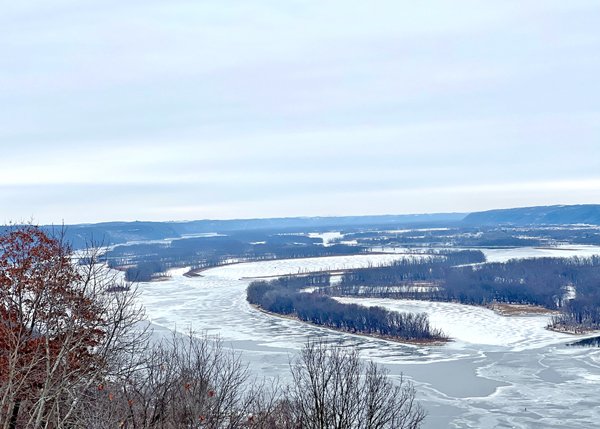
Also notable is the overlook near the main parking lot, where visitors can view the confluence of the Wisconsin and Mississippi rivers—a site explorer Louis Joliet and Father Jacques Marquette saw when they reached the mouth of the Wisconsin in 1673.
Pettit said Pikes Peak is also historically significant as the site visited by Zebulon Pike on Sept. 5, 1805, during his first expedition. Pike was looking for a suitable location for a fort. It wasn’t until November 1806 that Pike and his team sighted and tried to climb to the summit of Pikes Peak in Colorado.
According to Pettit’s research, the creation of Pikes Peak came over a decade after conservationists and civic boosters launched a campaign to create a Mississippi Valley National Park, and later the Upper Mississippi National Park, which would have stretched from Minneapolis and St. Paul to south of Dubuque. Advocates saw the region’s scenic bluffs, river views and remnants of primeval forest as worthy of national preservation.
Federal evaluation ultimately concluded that creating a national park unit was not feasible because too many towns and cities lay within the proposed boundaries. Instead, the region received partial protection through other conservation designations, most notably the Upper Mississippi River National Wildlife and Fish Refuge established in 1924, which today protects more than 200,000 acres of habitat along the river.
Although the Mississippi Valley National Park never came to fruition, the movement helped raise awareness about the ecological and historical value of the Upper Mississippi’s landscapes. It set the stage for later conservation efforts and deepened regional pride in sites like Effigy Mounds National Monument and Pikes Peak State Park.