The Chinese tile game mahjong has experienced a surge in popularity in the United States in recent years, with Eventbrite reporting a 179% increase in mahjong events nationwide and review site Yelp finding searches for local clubs up nearly 4,500%.
The game was even the basis for a 2026 Hallmark movie and has appeared more frequently in game show questions and other pop culture outlets.
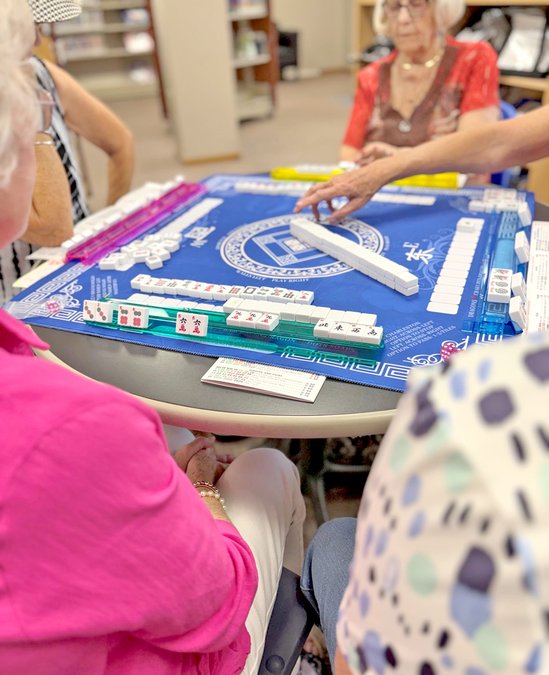
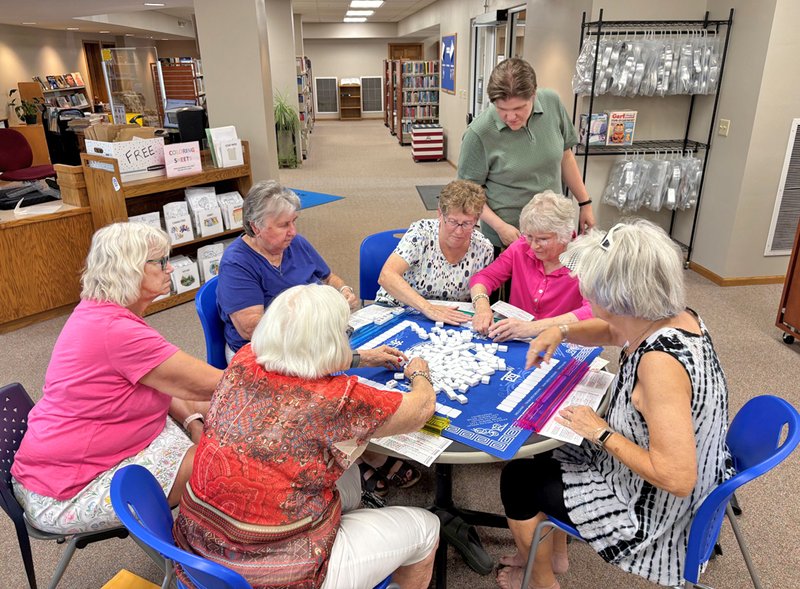
Clayton County is no different. The libraries in Elkader, Guttenberg and McGregor have thriving weekly groups, and other residents play regularly in one another’s homes.
Sara Hertrampf is one of them. To help introduce more people to the game, she’s even coordinated with Kwin, a certified instructor from Dubuque, to lead a beginner learning session from 1 to 4 p.m. on Sunday, Sept. 20, at the Elkader Golf and Country Club. (Fill out this form to sign up or call Hertrampf at 563-419-1988 with questions.)
“Beyond being enjoyable, mahjong offers several benefits, including mental stimulation through memory, concentration and decision-making, as well as opportunities for social connection and community building. It appeals to multiple generations and can become a lifelong hobby. What I find especially interesting is how the game brings together people who might not otherwise meet,” Hertrampf shared.
The game has largely come to the area by way of locals who learned it while wintering in southern states, where mahjong has long been popular.
“The reason I play mahjong is because we wintered in Florida and I played with my friends there,” said Arlys Fitzgerald, who taught Hertrampf and others in Elkader. “When we left Florida to come back to Iowa, what I missed most of all was my friends and playing mahjong. I was looking all the time to find somebody to play mahjong with and I invited three girls up to my house and tried to teach them. They found out it wasn’t their cup of tea.”
It was an ad in the newspaper welcoming interested players to the McGregor Public Library that eventually connected her with other local players like Wendy Schutte, Marsha Clark and Luana Stiemke, the assistant librarian. The group meets every Monday, from 1 to 4 p.m.
Now, a group has taken hold at the Elkader Public Library, too, meeting from 1 to 4 p.m. on Thursdays. Fitzgerald devotedly attends both and plays at home.
“We’re hooked,” she quipped.
Another dedicated group also meets at the Guttenberg Public Library on Thursday afternoons, beginning at 1 p.m. Members estimate they are a decade into the gathering.
“We have up to eight, and it’s not been all the same people for all of those 10 years,” said Laura Manson. “But this is our Thursday thing that takes priority over most other things. I plan my calendar around it.”
“Basically, doctor’s appointments are the only thing” that take precedence, joked Wendy Shea.
Learning the game
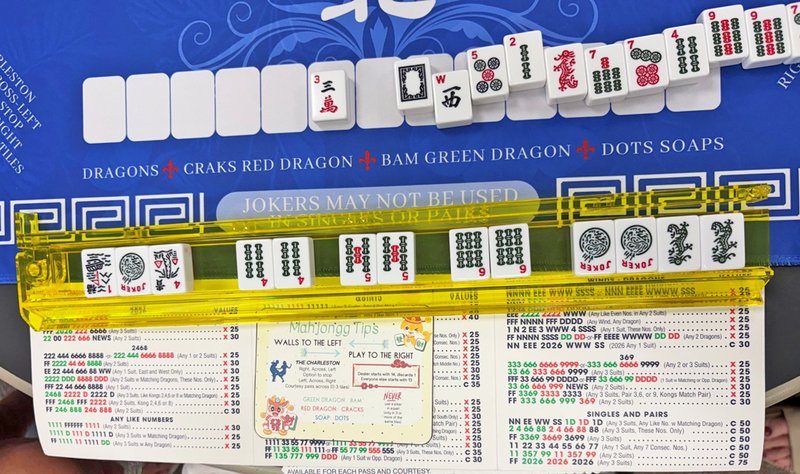
In mahjong, the goal is to be the first player to get a winning hand with a variation of tiles. Games ideally include four players, but can be played with two or three as well. Local players largely follow the National Mah Jongg League, which issues an official card of tile combinations annually.
“There are a lot of rules,” Shea cautioned. “Every year you get a new card because the hands change. You get so many tiles you start out with. And then you look at your hands on this card and you decide where these tiles are going to fit in one of these hands. When you draw, you try to build one of these hands, and when you do and are successful, then you mahjong.”
Players likened it to card games, or even doing a puzzle.
“If the tiles you need are out there and you can’t get them, it forces you to adjust and make a new plan. It’s a little exciting because will you get to the end? Will somebody win? Sometimes nobody wins. It’s chance, but it’s also planning,” explained Stiemke.
Players warned learning can be intimidating, and dedication to playing multiple hours at a time is often required. Although there are apps and online tutorials that can help, the best way to learn is simply by doing.
“If you want to learn, you just have to jump in and play,” Wendy Schutte said.
Manson agreed. “You just need to practice, and you can’t be afraid to make mistakes, especially when you’re first learning the rules,” she said. “We usually have [newcomers] sit and watch first, and people will sit beside them and mentor them. Some people catch on rather quickly.”
The Elkader Public Library has introduced “Lil Mahj” cards, which director Samm Schwarz said are meant for all ages and ideal for teaching children and beginners.
“When you’re using tiles and you’re having to learn different terms, it makes it less scary,” she added.
The McGregor Library, too, has some beginner-friendly options for learning, Stiemke noted.
Attendees said libraries have become the perfect spaces to host groups because they are accessible and less intimidating.
“A friendly environment to learn in is very important,” stressed Kathy Schutte, who plays in Elkader.
Schwarz understands purchasing the mahjong components, having adequate space and finding others to play with can be challenging.
“It’s easy for us to offer it, and then if you want to get together, come to the library. We’ll have all the stuff for you. Then you can play whenever you’d like,” she said.
Why mahjong?
Players enjoy mahjong because it’s a challenge.
“It’s a great brain exercise, and it requires concentration,” Manson said.
Stiemke finds it artistically pleasing, stating, “The tiles are pretty and interesting. There are even artists who are making beautiful, non-conventional tile patterns.”
Most of all, though, mahjong is fun—and an important social outlet.
“It’s always fun to get a group of women together and play a game we all enjoy,” shared Wendy Schutte.
“And it’s a great way for newcomers to meet people in town,” said Laura Kreofsky, who plays in Guttenberg.
Perhaps Kathy Schutte said it best: “We’re building our own community—one tile at a time.”