By Bruce Thein
Long before paved highways and weekend entertainment options, people in northeast Iowa followed a simpler rule: if there was music, they would find a way to get there. For nearly a decade and a half, they found it at Plagman Barn, just outside Garber.
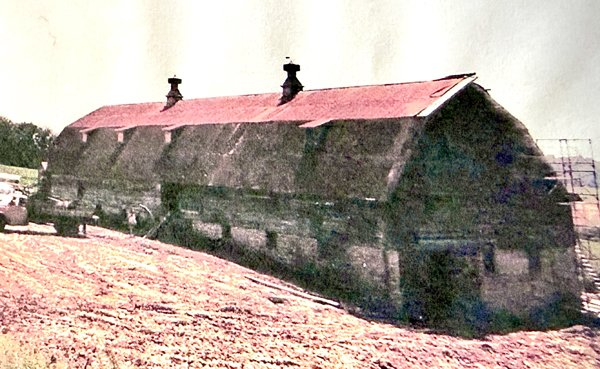
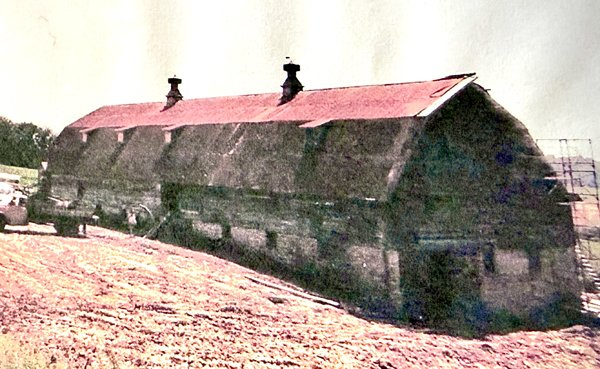
Built in the early 1920s by Bill Plagman, the large barn was never intended to be an ordinary farm structure. It was built specifically to hold dances, not just as a livestock/hay barn. From the start, it was designed as a place for people to gather. With a wide, open interior, free of support posts, described as unusual for that era, it was ideally suited for dancing. On Sept. 11, 1925, the barn hosted its first public dance and word of the dance spread quickly.
According to a 1982 Guttenberg Press article written during the barn’s restoration, Plagman Barn became a prohibition era watering spot and dance hall, drawing crowds from miles around. On weekend nights, farm families and young couples traveled dusty roads by car, wagon or borrowed ride to hear live music echo through the countryside.
The article recalls that dancers filled the floor to the sounds of both local bands and nationally known performers, including Duke Ellington and a young Lawrence Welk early in his career. Admission was a modest 36 cents, but the experience left a lasting impression on those who attended.
The dances followed a familiar rural rhythm. Bands set up along one side of the barn while couples circled the floor under hanging lights. The music ranged from popular dance tunes of the day to the driving rhythms that defined the late 1920s and early 1930s. Some came for the dancing and others came for the social life. It was a time to meet up with friends, court your sweetheart or just to share an evening far removed from work and daily chores.
Plagman Barn’s popularity also reflected its time. Prohibition was in effect, and dance barns like Plagman’s became informal gathering places where rules bent quietly and memories were made. The barn offered something scarce in rural Iowa during the interwar years: escape, community and celebration.
The dances continued through the Great Depression, providing an affordable diversion when money was tight and morale even tighter. Even then, the barn retained its reputations as a place worth traveling to, a rural entertainment venue that rivaled town ballrooms in spirit, if not by size.
By 1939, the music faded. The final dance held at Plagman Barn was a wedding dance, marking the end of an era. As tastes changed and large rural dance barns became less common, the building slipped into quieter use, going through different owners and eventually used mainly for storage/hay. But the memory did not disappear.
When the Northeast Iowa Farm & Antique Association began restoring the barn in the early 1980s, they weren’t just preserving a structure. They were reviving a tradition. The 1982 Guttenberg Press article made clear that Plagman Barn was remembered not simply as a building, but as a place where the countryside once came alive with music.
The Association began renovations with a plan to use it as museum space for antique machinery and household goods. A benefit dance was held during that restoration period in August 1982, and the first “Show Days” followed in September 1982.
Today, the barn stands as a reminder of a time when entertainment required effort, community meant showing up in person and a few good musicians could turn a rural barn into the center of the world for at least one night.