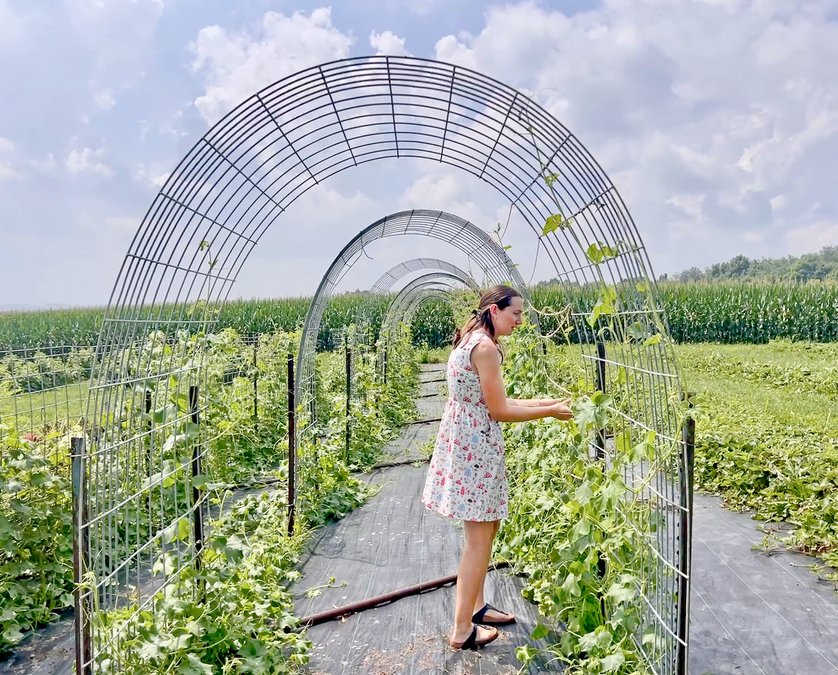
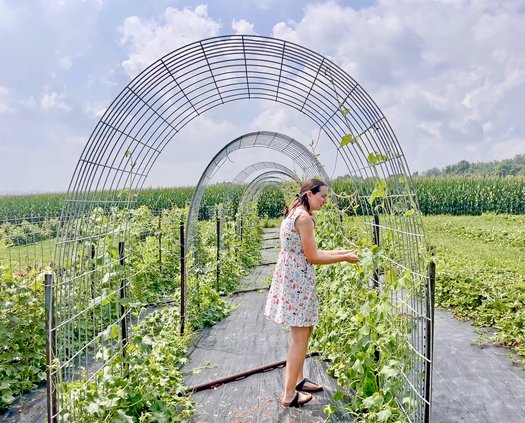
Although Hilary Davis grew up in rural Monona and served as Clayton County Pork Queen, she said it wasn’t until she was running for Iowa Pork Queen and meeting students from Iowa State University that she really began considering an agricultural career path.
She later majored in ag business at ISU, learning further how diverse the field can be.
“I really enjoyed being around farmers, being in agriculture,” Hilary said.
That outlook continued to stay with her, first in Idaho, where she moved with now husband Chris post-college. She took orders from Washington State University’s dairy facility, which was known for its cheddar cheese, then later was hired to call and ask oil seed farmers about their cost of production. That stint turned into a larger project interviewing wheat growers around the Pacific Northwest about their production practices—as well as a thesis for a master’s degree in applied economics.
The couple lived around five years in Idaho, before returning to Iowa. Hilary began working for the Farm Service Agency in Cedar County, while Chris got a job with an engineering firm in Davenport, which he still does remotely.
“We were within like two hours. A lot different than a 25-hour drive. Then we both had opportunities to move here,” Hilary said. “I never thought my kid would go to the same elementary school I did. It’s fun to be back in the community I grew up in.”
Now living across the field from where she grew up, Hilary said gardening was a natural outlet.
“I always love to grow different things,” she remarked. “But I don’t just grow the Better Boy Tomato, because there’s these German pink tomatoes that look really fun, then there’s these yellow ones that I want to grow, and ones that are shaped like pears. I want to grow them too.”
That curiosity is what got her into vegetable seed production even before moving back to Clayton County. Hilary recalled responding to an ad in a Baker Creek Heirloom Seeds catalog and thinking, “Maybe I can make some money doing this.”
“That’s how I got my first tomato seed contract,” she said.
This year, the Davises have two different tomato contracts, as well as one for snake beans. But they’ve grown everything from sweet peppers to what she described as “a really ugly cucumber.”
“The skin of it turned brown and crackly,” Hilary recalled. “There’s nothing really wrong with it. You just needed to peel it if you wanted to eat it. Otherwise it was kind of tough. But I didn’t want to grow it again.”
The seed company generally provides options. That’s how they chose snake beans this year.
“They’re more like a gourd—an Asian-type vegetable. They’re supposed to be quite long and they’re called a snake bean because they sometimes curl up,” Hilary described. “The plants even smell fruity. We were out there and were like, ‘It smells like cereal out here.’ Super weird. It’ll be interesting to see how that turns out.”
As seed producers, the Davises start the plant seeds inside, grow them, harvest and clean the resulting seeds, which are then shipped to the seed company. Hilary said it’s a more competitive field to break into these days, and producers need ample space to not only grow the crop but prevent cross-polination.
“Tomatoes typically self-pollinate, so it’s not that big of a deal,” she said. “But if you’re growing a sweet pepper crop, you don’t want hot peppers nearby to cross. And pumpkins, they want you to have a mile of distance between any other pumpkin crop.”
Providing clean seeds is no easy task. Hilary said she currently has a machine to run tomatoes through, rather than pulverizing by hand.
The number of seeds collected depends on the contract, she explained.
“Sometimes they just want smaller lots. Maybe they just want half a pound to a pound of tomato seeds. If it’s beans or a bigger seed, they might want 40 pounds, just because you need more,” she said. “If we reach our goal this year, hopefully we have 10 pounds of tomato seed to ship, which is like two or three really full gallon bags of tomato seeds.”
It’s fun for Hilary to be part of this aspect of agriculture. “People don’t think about, well, you have all these packets in the store. Where does this come from?”
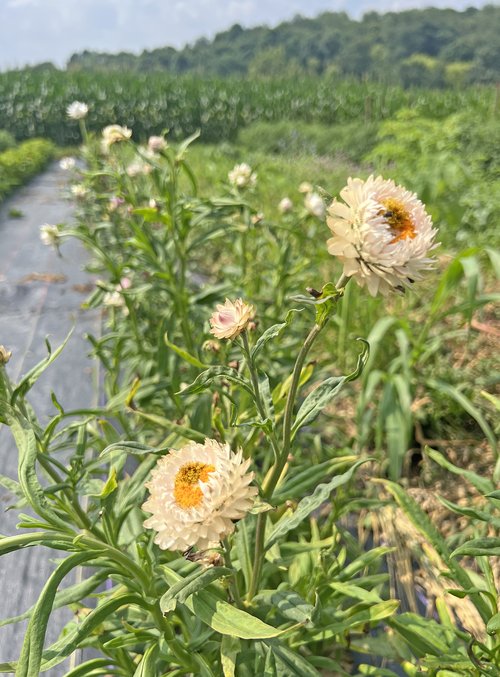
Under the name Humble Harvest, Hilary raises other plants and produce too. A few years ago, she began growing and selling flowers—both fresh cut and dried—although she largely focuses on dried displays now. Humble Harvest also offered asparagus this year, and for the first time, strawberries. Raspberries are popular as well.
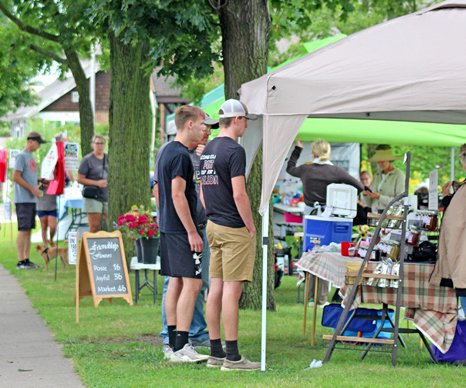
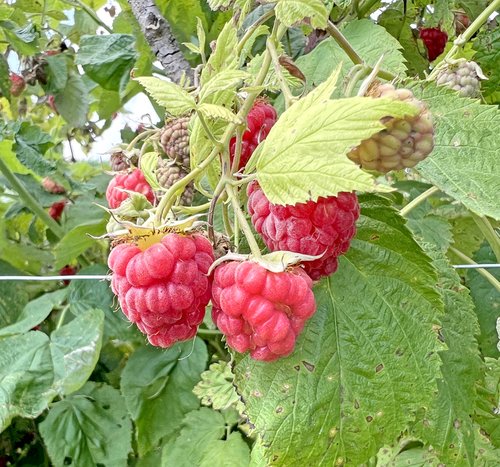
Hilary first found success with the raspberries at the Monona Farmers Market, and it spurred her to grow the patch. It now includes around 15 different varieties.
“I generally don’t have any problem selling them between people who want to freeze them and have them later on, or the people who just want to make jams and jellies out of them, to people who have kids that eat them fresh. This summer, I’m having more of a problem finding time to pick all of them,” she shared.
From the fruits of her harvest, Hilary has made jams and jellies. Two years ago, a pepper seed contract supplied her with excess red sweet peppers.
“That’s when the pepper jelly started. I had so many peppers. And it’s gone over really well,” she said.
Last year, Hilary even made and sold sauerkraut through the state’s cottage laws.
While her grandma and mom have been good resources for gardening—and then utilizing the produce—Hilary said trial and error is the most important factor in learning.
“There are a lot of weeds out here. There’s a ton of bugs. There’s a ton of failures. Even the best grower, there are things that don’t work,” she stated. “I wish I could just impart knowledge to all the people who want to garden.”
In a way, Hilary can do that through the Driftless Homegrown Collective, a collaborative network of local producers that includes Humble Harvest as well as Evanson Acres and Driftless Cattle Co. from rural Monona and Triple S Treasures from Luana. The group hosted a farm crawl in June and has planned another for Saturday, Aug. 15, from 9 a.m. to 1 p.m. The goal is to encourage people to support local, shop fresh and know exactly where their food comes from. Learn more by following the “Driftless Homegrown Collective: August Farm Crawl” on Facebook.
“It was really the first time we welcomed people out here,” Hilary said. “Initially, I was like, if 10 people show up, that’ll be fun. I think we had around 40 people, and a lot of people went to all [the stops]. It was a good way to expose new customers to different people.”
Hilary hopes efforts like this encourage people to grow, or at least consume, more local foods. She most enjoys connecting with the community through what she raises.
“Community is so important when we live in a social media age,” she reflected. “There’s a lot of joy in growing something and somebody being like, ‘Your raspberries are delicious and they’re the best.’ I want to grow food for my community. That’s my goal.”