This is part two in a two-part series about Clayton Ridge educators who are participating in the Iowa STEM Teacher Externships Program this summer. Through the program, STEM educators work side-by-side with industry employees who help bring the classroom curriculum to life. The overall goal is to transfer knowledge and skills from the host site back to the students of Iowa. Teacher externs work 200 to 240 hours and earn a stipend of up to $5,500 and three graduate credits through the University of Northern Iowa’s Continuing Education program, paid for by the Iowa STEM Teacher Externships Program.
By Audrey Posten
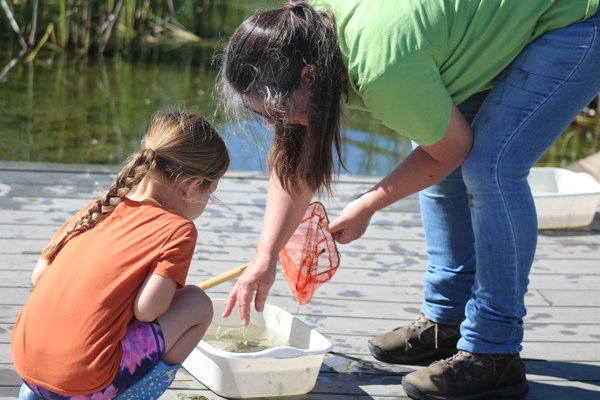
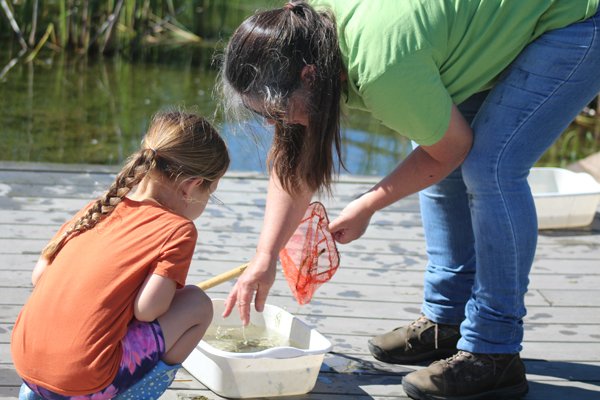
Clayton Ridge third grade teacher Jan Stavroplus is making—literal—natural connections through her summer externship at the Driftless Area Wetlands Centre, a nature center in Marquette that provides fun and interactive educational experiences for families, school groups and other visitors.
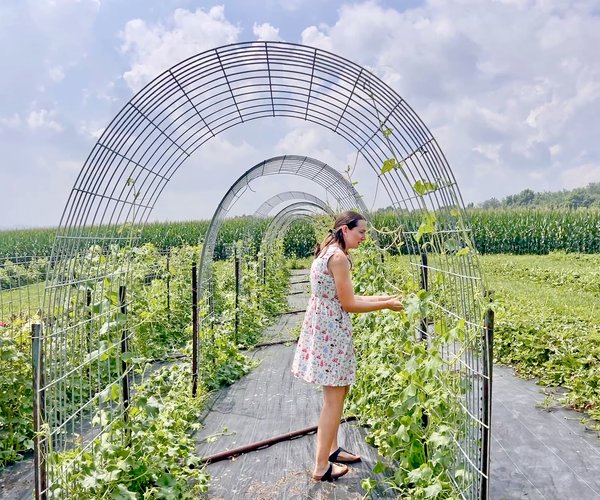
Stavroplus greets guests and helps maintain the facility, which features a wetland, prairie plantings and nature play trail, as well as indoor educational displays, a nature nook, gift shop and aquariums with snakes, turtles and other critters. She’s also been integral in the Wetlands Centre’s programming, including a series of summer day camps for youth ages 3 to 11.
Stavroplus said the externship is making her “look at things very differently,” not only in how she engages with programming, but in what she’ll incorporate into her classroom when the new school year starts.
“I have to figure out what could I exactly do from here and put in the classroom—maybe on a smaller scale,” she said.
“I don’t have a creek bed, but I could make a stream table,” Stavroplus gave as an example.
A sponge could mimic a wetland.
“I could take a sponge and say, ‘How many milliliters does that hold?” and then use that as a wetland metaphor to say, ‘This is what it does.’ It does purify and filter, and it does absorb water. Things like that,” she explained.
Stavroplus is also inspired to incorporate more journaling and narrative writing into her curriculum, whether students are viewing a video clip or—even better—outdoors observing nature themselves. That sparks more discussion and spontaneity, she commented.
“Take a journal. Take the binoculars. Observe your surroundings. Have them tell you what they observe, jot it down, then you know what they want to know about. What’s our questions from it? What do they arrive at?” she shared. “Ask them to label this or give a description. Watch them write or draw a picture.”
“I’ve noticed kids that don’t like to write, don’t like to draw, you’ve got them looking at details they don’t recognize always. They look at the bark on the tree, and another one might see the bird fly over. They can go more in depth, compare and contrast, and they’re excited. If they discover it, come up with it, talk about it, it sticks. Connections through story,” Stavroplus continued. “It’s different than in the classroom. They are excited about it because they don’t have the pressure.”
For narrative writing, Stavroplus hopes to take students outside and record on their iPads.
“I’m going to let them get to talking and record themselves,” she said. “Now, you just wrote your paper. Type it up. The ultimate story. I never thought of that until the externship this year.”
Stavroplus feels the externship has improved her communication, especially working with a wide range of ages and interests. She’s become more in tune and focused to the questions kids ask.
Additionally, she sees first hand the importance of play in helping youth learn.
“There’s a lot of that here,” Stavroplus said, “and we don’t give them the answer. They figure it out. It’s fun to watch them.”
The externship has also opened Stavroplus’s eyes to how kids’ interests can connect to future careers.
“It sounds silly, but you’ve got the mud kitchen [that’s part of the nature play trail]. You’ve got a chef, right? Maybe they’re into water management or engineering or architectural design. Then you’ve got your construction workers. You’ve also got kids that are super observant, so you see the scientists,” she explained.
Wetlands Centre Director Alicia Mullarkey said Stavroplus has been a valuable asset through her knowledge and enthusiasm.
“The kids are all very excited to have her. She brings that enthusiasm, but also she knows what’s happening in the classroom. She knows how to tie it together and how to engage with them,” Mullarkey noted. “I’m always very impressed with teachers as far as their ability to take something and make a lesson out of it, to make sure they have all the resources they need. They are doers.”
Stavroplus suggests the externship experience for other educators. It’s important to put yourself out there and step outside your comfort zone, she said.
“Just like we expect kids to do hands on, adults should probably do something hands on too. You don’t understand it, you can’t learn it, unless you do it. The exposure is different,” Stavroplus reflected. “You’ve got to get out and away from what you do to see what there is.”