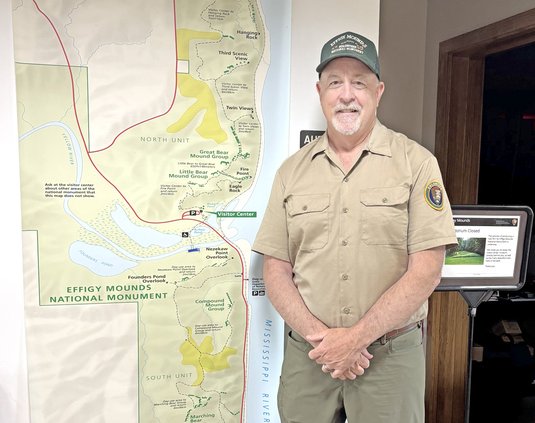
MFL MarMac educators Melissa Haberichter, Elise Martins and Dale Hanson participated in the Iowa STEM Teacher Externships Program this summer. Through the program, STEM educators work side-by-side with industry employees who help bring the classroom curriculum to life. The overall goal is to transfer knowledge and skills from the host site back to the students of Iowa. Teacher externs work 200 to 240 hours and earn a stipend of up to $5,500 and three graduate credits through the University of Northern Iowa’s Continuing Education program, paid for by the Iowa STEM Teacher Externships Program.
Each educator recently shared about their externship experiences.
Dale Hanson
Hanson, a middle school math teacher, decided to participate in the extern program because he heard positive things about it and had a good experience doing a similar program at 3M one summer.
“I also enjoy learning new things and pushing myself to be in new experiences and environments,” he said.
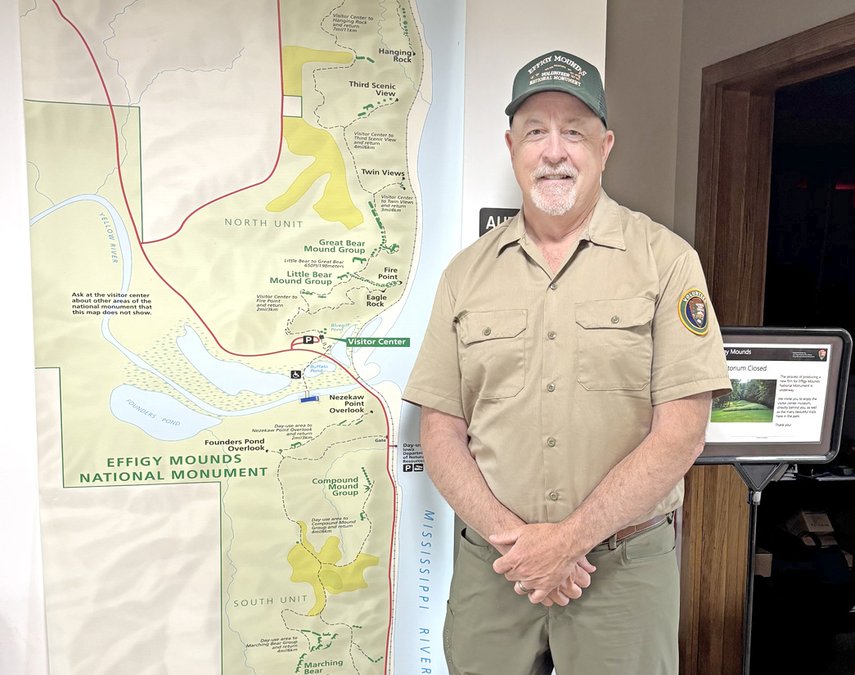
With interests in history and hiking, Hanson applied to Effigy Mounds National Monument.
“I was looking forward to an opportunity where I could spend time outside rather than being inside all of the time like I had been at 3M. I enjoy hunting, fishing and hiking, so I thought it could be a fit,” he explained.
Hanson’s main projects were to develop a guided tour of the north unit restored prairie and to make a brochure about the prairie. Even though he grew up on and lives on a farm, Hanson admitted he knew little about native prairie plants. He credited the staff, especially the biotechs who work to try to control and reduce invasive plant species, for helping him learn more ahead of the July 11 guided tour.
Additionally, Hanson roved on the trails, helped with the front desk and demonstrations and made a rainy day activity area for people to do word finds and coloring sheets.
“I learned so much about the park and went on all of the tours and the majority of the trails with park staff, including the superintendent, rangers and the park archeologist,” Hanson said. “They shared their expertise and knowledge with me and I learned more than I possibly could have by just visiting the monument.”
Hanson believes his new knowledge and experience working with people with a variety of educational backgrounds and careers is something he can use when doing Career Compass activities at school. He suggests the experience for any teachers who want to push themselves, learn more and earn some extra income in the summer.
Melissa Haberichter
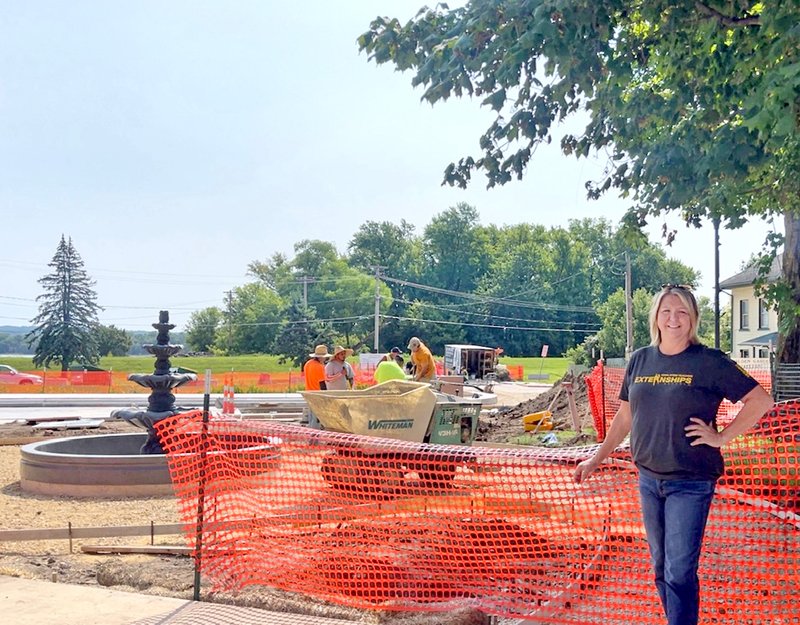
Haberichter is a teacher librarian, work-based learning coordinator and business teacher at MFL MarMac High School. Through her position, she helps high school students secure internships and real-world learning experiences. This summer, she found some of her own as an extern with the city of McGregor.
“If I’m going to say, ‘How do you know what’s really out there?’ then I should be willing to do the same thing,” she said. “Just the networking and different viewpoints and perspectives you see, that’s what I want the students to have. So this is making me do that.”
Early projects included helping the city transition from one community notification system to another and assisting the McGregor Historical Museum with a business enhancement grant application for facade improvements.
Haberichter has also played an integral role in McGregor’s grant-funded Creative Places Accelerator Committee, which she was part of as a volunteer prior to the externship.
Creative Places is “not just public art,” Haberichter explained, “but how to create places and spaces and memories, to make people feel like they belong, and what can the community do to cultivate that experience.”
As an extern, Haberichter has learned about the city perspective of administering the grant, as well as writing requests for proposals for art installations. She also supported planning and logistics for a parking lot party in the First Street Parking Lot by McGregor Municipal Utilities.
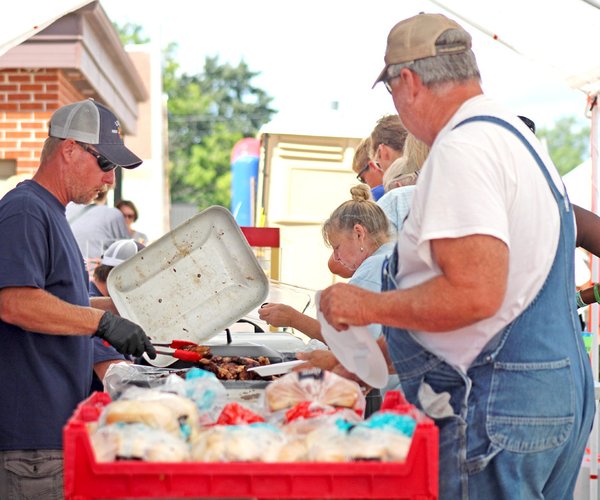
“The First Street Parking Lot sits there, and it’s definitely useful, but could it be something?” she wondered. “So there was this push to maybe rename it and look at it for an event venue, but still be a parking lot. I’ve been part of organizing events, but it’s good to see it from the city side—Do they have a food permit and an alcohol permit? Do we have enough perimeter fencing? What are the city guys willing to do to help us get that going?”
Haberichter said she’s been “extra hands” for the city, but feels that’s what she wants students to do as well.
“Jump in and be part of something where you add value to an organization, to a business, to whatever. Learn as you go. Be engaged and curious. That’s what I’m trying to be like,” she shared. “It’s creating value for others, and then that creates opportunities for you.”
Haberichter feels the externship has broadened her network, helping her get to know more people and organizations in the community. She’d love to get students involved with committees as well, to view how different personalities work together and feel the push and pull of competing priorities.
“We really push work-based learning and internships, but I almost want to expand that to community-based learning, or community-connected learning, so students realize they can add value and they can contribute in a way,” Haberichter said. “I think they may realize more of what’s happening in their community, and if they feel like they’re a contributor, maybe they’d stay here. They might make different or more meaningful career choices because they have this experience.”
Haberichter believes the externship was a good experience for herself and the host. Like Hanson, she encourages other teachers to consider it.
“It is a commitment, but I would definitely recommend it for a variety of reasons,” she said.
Elise Martins
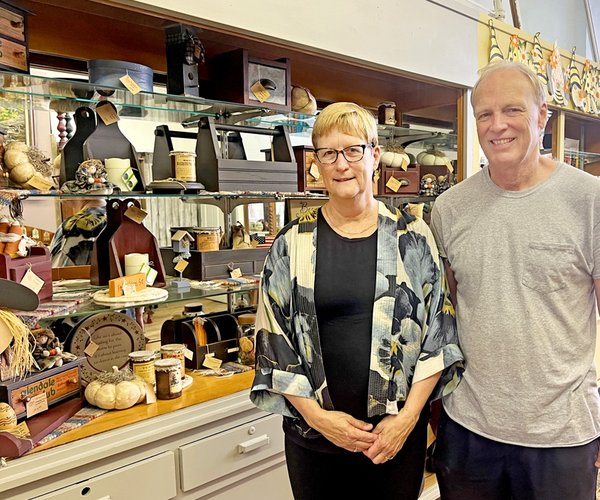
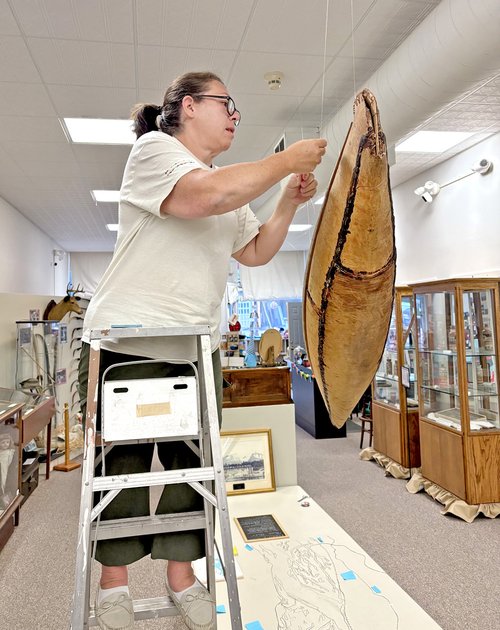
Martins, a high school special education and social studies teacher, spent her summer at the McGregor Historical Museum. She said it was a natural extension of her volunteer role as secretary of the historical society board, where she was already active in creating exhibits and interactive kids activities and adding new items to the museum gift shop.
“I like coming down here and being creative, using my crafty and artsy side,” Martins said. “I also like meeting people from different walks of life that come in here to tour the museum. Some are people that lived here a long time ago. Others have never been here before.”
As an extern, Martins has continued to expand and organize the gift shop. She’s also tackled new exhibits, including a special exhibit highlighting Eddings Archery Company and what will be a permanent “River Tales Exhibit” in the center of the museum.
“McGregor is a river town, but we didn’t really have a river exhibit. McGregor is right where the Wisconsin River flows into the Mississippi River. This is where Marquette and Joliet, in 1673, ‘discovered’ the Mississippi River. We need to tell that story, because people who have never been here don’t know that story,” she explained.
Martins is painting a detailed river map as part of the exhibit, which will be a visual reference point for visitors when they learn about sites like Indian Isle, the McGregor Heights, Effigy Mounds National Monument and Sny Magill.
She also worked with fellow board member Corky Bickel and the National Mississippi River Museum & Aquarium to get a smaller scale birch bark canoe. It will hang from the museum ceiling so visitors will have an idea of how Marquette and Joliet traveled down the Mississippi River.
Martins hopes to return as an extern next year to create permanent exhibits on the Ringling Brothers and sand artist Andrew Clemens.
The externship experience translates directly to the classroom, according to Martins, especially a semester-long elective called Driftless Area History and Lore which she started a couple years ago.
“The more I work here, the more that I learn about the Driftless Area, the more I can bring into the classroom. That obviously helps me as a teacher,” she said. “And hopefully it sparks interest in current and future students as well, to get people out in their own backyards and learning about their history. When people start to hear the stories, they’re like, ‘Wow.’”
Martins suggests the externship program as a good way to learn outside the classroom.
“You’re still interacting with the public, but in a different format. It gets you out there networking with people, making connections that you can use in your classroom, whether it be future field trips or guest speakers,” she shared. “It gets you out of the four walls that are normally your classroom, because sometimes there’s safety in your classroom and you get very comfortable and used to that. By doing these externships, you meet a whole new genre of people. It’s almost like a whole new world besides being in a school building. So that is really fun and exciting.”