
By Bruce Thein
Children have always found ways to move faster than their parents would prefer. One generation rode bicycles. Another generation rode skateboards. Today, many children are riding electric scooters. That reality has created a new challenge for communities across the country, including Guttenberg.
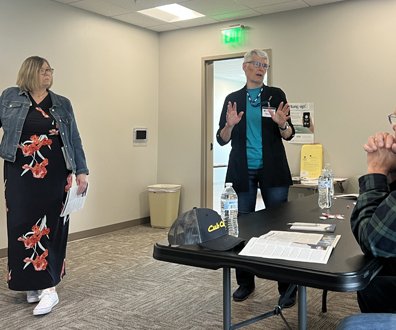
At a recent city council meeting, concerns were raised about children operating electric scooters on city streets and sidewalks. Residents described riders weaving through traffic, failing to stop at stop signs, riding after dark without lights, operating without helmets and traveling at speeds that make many adults uncomfortable. Some children have even been observed riding barefoot. The discussion was not centered on a single incident. Rather, it reflected a growing concern about safety and whether existing rules are keeping pace with rapidly changing technology.
One example discussed involved a young child who reportedly collided with a pickup truck because she did not know how to use the scooter’s brakes properly. Fortunately, she was not seriously injured. The outcome could have been much worse. The incident highlights a reality that many communities are beginning to face. Electric scooters are not bicycles.
Scooters are faster. They accelerate quickly. They require riders to understand braking, traffic awareness, and safe operation. Yet many riders are children who may not fully appreciate the risks that come with operating a motorized device around vehicles and pedestrians.
The challenge facing local officials is that enforcement alone may not solve the problem. At the council meeting, the police chief acknowledged the practical limitations involved. How does a police officer issue a traffic citation to a 7-year-old child? Even if a violation occurs, enforcement becomes difficult when the riders are very young. That observation points to a larger issue. This is not simply a law-enforcement question. It is also a question of education, supervision and community expectations.
For generations, children in small towns have enjoyed a degree of independence many people value. Riding bicycles through neighborhoods, meeting friends at the swimming pool and exploring town without constant supervision are experiences many adults remember fondly. Most residents do not want to lose that tradition.
At the same time, electric scooters have introduced something new. A child can now travel at speeds that were uncommon for young riders only a few years ago. The streets have not changed, but the vehicles have. Cars still back out of driveways. Drivers still have blind spots. Intersections still require riders to stop, look and yield. Physics has not changed either. When an electric scooter collides with a vehicle, the scooter rider is almost always the vulnerable party.
That reality has prompted many towns to examine questions that were rarely discussed in the past. Should there be age limits? Should helmets be required? Should nighttime riding require lights? Should younger children be supervised by an adult?
Reasonable people can disagree on the answers. What is difficult to dispute is that the conversation is occurring for a reason. Residents are noticing unsafe behavior. Parents are being asked questions. City officials are discussing potential options. Police officers are responding to concerns while recognizing the limits of enforcement.
In many ways, Guttenberg is confronting the same issue faced by countless towns across America. Technology has changed faster than the rules. The goal is not to eliminate childhood fun or create unnecessary regulations. Most people would agree that electric scooters can be an enjoyable form of recreation and transportation when operated responsibly. The goal is safety.
Regardless of future policy decisions, helmet use should be strongly encouraged. A helmet cannot prevent every accident, but it can significantly reduce the risk of serious injury when one occurs. No community wants to wait until a serious injury occurs before paying attention to warning signs. Conversations like the one recently held at the council meeting provide an opportunity to examine the issue before a tragedy forces the discussion.
Whether the solution ultimately involves education, parental involvement, new ordinances or some combination of all three remains to be seen. What is clear is that the scooter safety challenge facing Guttenberg is not going away. As electric scooters become more common, communities will continue searching for the right balance between freedom, responsibility and public safety.
Perhaps this is a conversation our community should have before someone is seriously injured. It may prove to be one of the more important local conversations of the summer.